
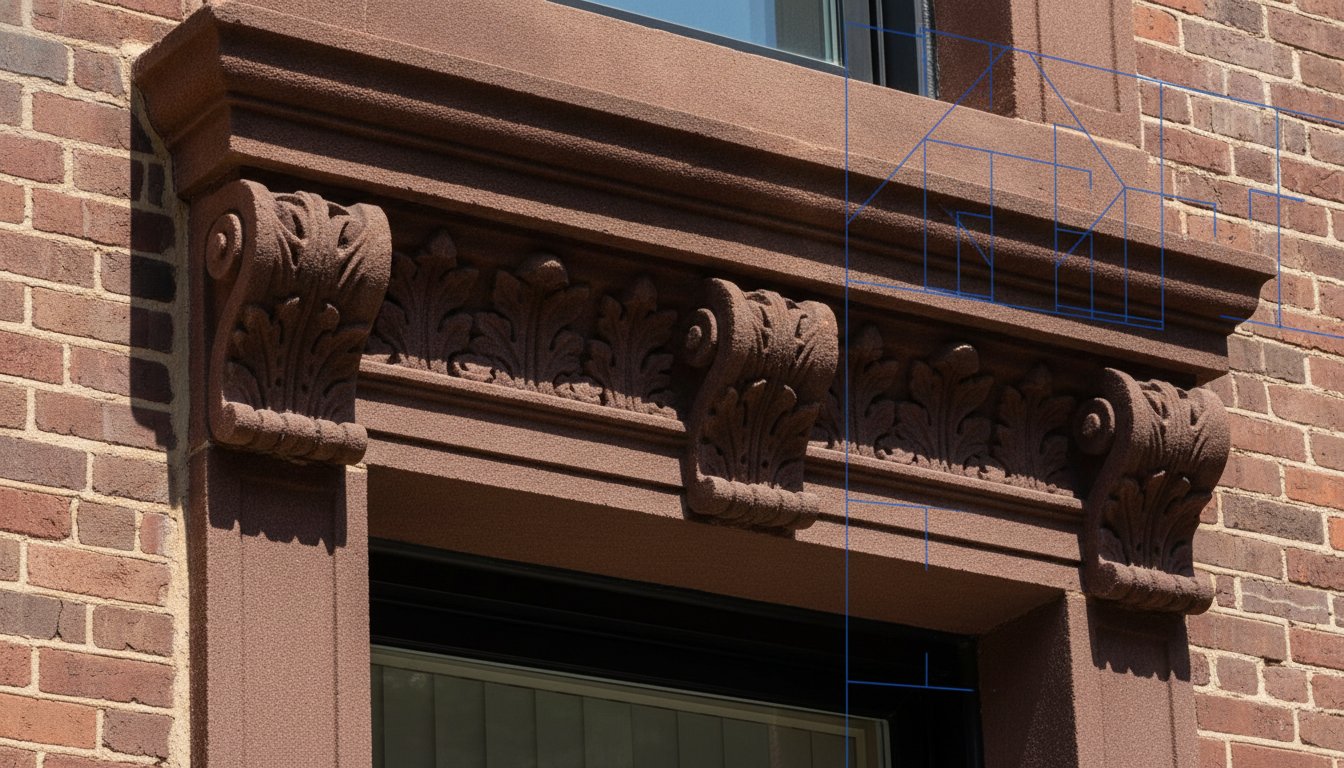
Owning a historic brownstone in Brooklyn or Manhattan is a matter of prestige, but one unapproved mortar batch can turn your architectural pride into a $10,000 civil penalty. You likely already know that maintaining a landmarked property requires a higher standard of care than a standard renovation. The challenge lies in understanding nyc landmark preservation rules without getting lost in the paperwork or fearing a surprise Notice of Violation. We agree that the process feels daunting, especially when you are trying to distinguish between a Permit for Minor Work and a Certificate of Appropriateness.
This guide will help you master the complexities of the Landmarks Preservation Commission (LPC) to ensure your facade restoration is both compliant and beautiful. You will gain a clear understanding of the permit workflow, learn which materials meet in-kind requirements, and find the confidence to choose a specialized masonry contractor. If you have immediate questions about your project, reach our team at 347-341-3808 or 718-350-7388, or email us at ProgressiveContractingNY@yahoo.com. We will walk through the specific steps needed to protect your home’s equity and architectural heritage through precise, historic restoration.
The Role of the NYC Landmarks Preservation Commission (LPC)
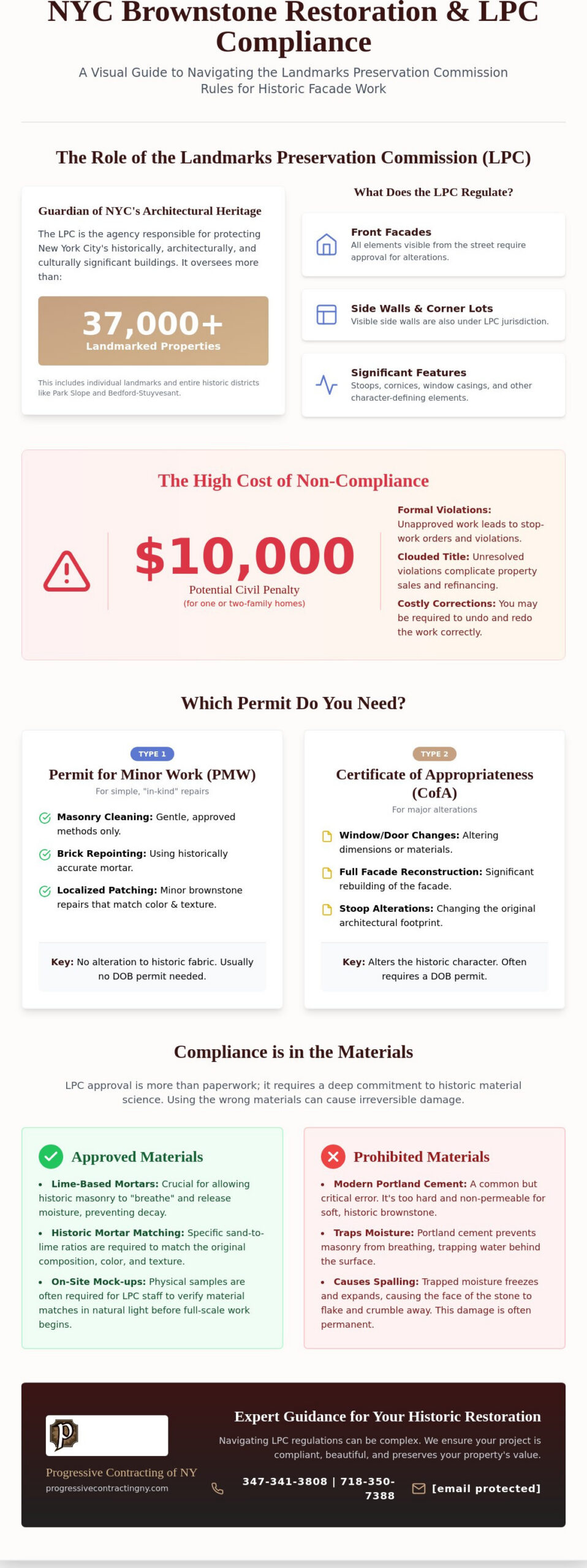
The New York City Landmarks Preservation Commission (LPC) acts as the primary guardian of the city’s architectural history. For owners of historic properties, understanding nyc landmark preservation rules is the first step in any successful restoration project. The commission oversees more than 37,000 properties, ranging from individual landmarks to entire historic districts like Park Slope and Bedford-Stuyvesant. While an individual landmark is recognized for its own unique significance, buildings within a historic district are protected because they contribute to the collective character of the neighborhood. The LPC’s jurisdiction typically covers:
- Front facades visible from the street.
- Side walls on corner lots.
- Significant elements like stoops and cornices.
A Certificate of Appropriateness is the required approval for any significant architectural changes that alter the historic character of a landmarked facade.
Does Your Property Fall Under Landmark Jurisdiction?
Verify your building’s status using the LPC’s digital Discover Map. This tool identifies if your property is an individual landmark or within a district. It’s a common mistake to assume “non-contributing” buildings are exempt. Even modern structures in historic areas must follow rules to maintain neighborhood harmony. For architectural context, see our guide on what defines a brownstone.
The Consequences of Non-Compliance
Working without a permit results in warning letters or formal violations. For one or two-family homes, penalties can reach $10,000. Unresolved violations also complicate property sales and refinances by clouding the title. To protect your investment, contact us at 347-341-3808 or 718-350-7388, or email ProgressiveContractingNY@yahoo.com. We help owners resolve these issues and ensure full compliance.
Navigating LPC Permits for Facade and Masonry Work
Managing a historic property requires a methodical approach to paperwork and technical standards. When understanding nyc landmark preservation rules, the first step is determining your exact scope of work. Simple brick pointing or minor brownstone patching often falls under a different regulatory path than structural reconstructions or window replacements. You must identify the correct permit type early to avoid work stoppages or civil penalties. The LPC Permit Guidebook provides the foundational framework for these requirements. Generally, the process involves preparing detailed photographs of current conditions and physical material samples before filing through the digital DOB NOW portal.
Permit for Minor Work (PMW) vs. Certificate of Appropriateness
A Permit for Minor Work (PMW) is usually sufficient for “in-kind” repairs that don’t require a Department of Buildings permit. This includes masonry cleaning, repointing, or localized brownstone patching that matches the original texture and color. Conversely, a Certificate of Appropriateness (CofA) is required for major alterations, such as changing window dimensions or full facade reconstructions. For complex projects like Brownstone Stoop Restoration in Brooklyn, a CofA is often necessary if the project involves altering the original architectural footprint or significant structural masonry.
The Importance of Professional Filing
Filing errors frequently lead to “Requests for Additional Information,” which can delay your project for weeks or months. In 2026, while most applications are processed digitally, the LPC still requires physical material samples to verify historic mortar matching. An experienced contractor acts as a stabilizing force, ensuring that these samples meet strict “in-kind” standards on the first attempt. This precision prevents the common trap of using modern portland cement, which can permanently damage historic soft-stone facades.
If you’re unsure which permit your project requires, our team can help you navigate the application process. For expert guidance on your restoration, call us at 347-341-3808 or 718-350-7388. You can also send project details to ProgressiveContractingNY@yahoo.com to ensure your filing is accurate and compliant from day one.
Ensuring Compliance During Brownstone Restoration
Physical execution determines whether your project survives a final inspection. Understanding nyc landmark preservation rules involves more than just filing papers; it requires a commitment to historic material science. A frequent error in Brooklyn is the use of modern Portland cement. This material is far too rigid for soft sandstone. It prevents the masonry from breathing, trapping moisture that eventually causes the brownstone to spall and crumble. The LPC strictly requires lime-based mortars that match the original composition to ensure long-term durability and structural integrity.
Restoring a Rammstein stoop or intricate stone carving requires a steady hand and an eye for detail. The LPC expects these features to be returned to their original state using approved casting or carving techniques. Before full-scale work begins, we provide physical mock-ups on-site. This allows LPC staff to verify the texture and color match in natural light, protecting you from costly corrections later in the project.
Historic Mortar Matching and Brick Pointing
The LPC requires specific sand-to-lime ratios to match the original Brooklyn facades. It isn’t just about the color. The tooling, or the specific shape and depth of the mortar joint, must mirror the neighborhood’s historical profile. You can see examples of this precision at brownstonerepair.net, where we showcase specialized masonry that satisfies both aesthetic and regulatory standards.
Working with a Landmark Specialist
Hiring a generalist who lacks experience in historic districts often leads to stop-work orders and heavy fines. A specialist understands the nuances of the in-kind rule and manages the relationship with LPC inspectors. For a professional assessment of your property, contact Progressive Contracting NY Corp at 347-341-3808 or 718-350-7388. You can also email your project details to ProgressiveContractingNY@yahoo.com for a transparent consultation on your restoration needs.
Protecting Your Historic Investment for the Long Term
Maintaining a landmarked brownstone is a significant responsibility that rewards you with lasting property value and architectural beauty. Success relies on the practical application of the standards we have discussed, from identifying the correct permit path to committing to authentic material matching. By prioritizing lime-based mortars and “in-kind” replacement standards, you avoid the common pitfalls of structural damage and costly civil penalties. Mastering the process of understanding nyc landmark preservation rules is the most effective way to ensure your restoration project moves forward without interruption.
Progressive Contracting NY Corp acts as a stabilizing force for homeowners in Brooklyn and Manhattan historic districts. We bring specialized expertise in historic mortar matching and facade restoration to every project we handle. If you’re ready to begin your restoration, reach us directly at 347-341-3808 or 718-350-7388. You can also email your project details to ProgressiveContractingNY@yahoo.com to receive a clear, transparent assessment of your needs.
Take the first step toward a beautiful, compliant facade by clicking here to contact Progressive Contracting NY Corp for an LPC-compliant consultation. We look forward to helping you preserve your piece of New York history.
Frequently Asked Questions
Do I need a permit for simple brick pointing on a landmarked building?
Yes, any exterior masonry work visible from the street requires a Permit for Minor Work (PMW). This is a core part of understanding nyc landmark preservation rules, as the commission must verify that your mortar matches the historic color and texture. Using the wrong materials can lead to permanent stone damage and formal violations. For assistance with your application, call our team at 347-341-3808.
How long does it take to get an LPC permit for brownstone repair in 2026?
Staff-level permits, such as a PMW, typically take a few weeks to process through the DOB NOW portal in 2026. Projects requiring a Certificate of Appropriateness take longer because they involve community board reviews. To speed up the process, ensure your application includes clear photographs and accurate material samples. We recommend emailing ProgressiveContractingNY@yahoo.com early in your planning phase to ensure your paperwork avoids unnecessary delays.
Can I change the color of my brownstone facade under NYC landmark rules?
No, you must match the original color of the stone. The LPC requires “in-kind” replacement, meaning any new brownstone or mortar must be indistinguishable from the historic material in color, glaze, and texture. This rule prevents modern alterations from disrupting the neighborhood’s character. Our specialists are experts in historic mortar matching and can provide samples that satisfy these strict requirements for your restoration project.
What happens if I perform work on a landmarked property without a permit?
Performing unpermitted work results in a Notice of Violation and civil penalties that can reach $10,000 for one- or two-family homes. You might also be required to undo the work and restore the property to its previous condition at your own expense. These violations complicate property sales and refinances until they are cleared. If you are facing a violation, call 718-350-7388 to discuss how we can help you achieve compliance.